Five Advocacy Strategies for Uneasy Times

Five Advocacy Strategies for Uneasy Times
Iris C. Freeman
October 23, 2026
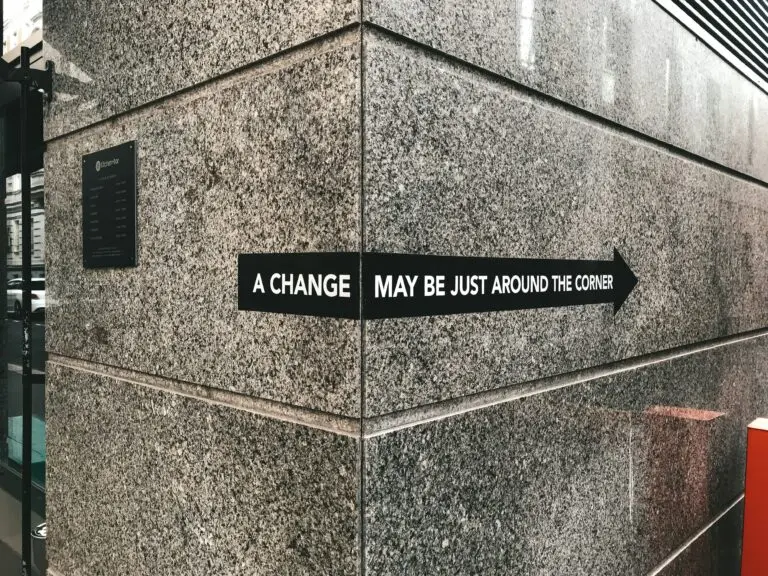
I haven’t lost hope. I’ve lost patience, but it must be around here somewhere.
There are plentiful research references to validate that we are working in a dispiriting time for federal priorities in elder justice policy, programs, and funding. Your own experiences likely back this up without the publications. However true, we need not be resigned to surrender. Even with patches of blue sky on the horizon, we won’t likely go back to before. The word “pivot” is in vogue, and despite conjuring an image of ballerinas en pointe in pink net tutus, these five moves will prepare the way for future federal policy advances.
Act at the state level, wherever you can.
Elder justice advocates, organizations, and coalitions continue to advance priorities with governors, state legislators and attorneys general. Acting at the state level is more likely to have a shorter timeline than federal advocacy. There are chances to exceed federal minimum standards as well as opportunities to demonstrate state-level achievements that may one day become federal law. A few examples follow.
Massachusetts’ Executive Office of Aging & Independence recently signed new safety regulations for assisted living residences across the state, aimed at strengthening protections for older adults. The new safety rules took effect July 31, 2026, and were based on a law enacted two years ago (H5033).
During the 2025 legislative session, Minnesota passed a law that provides a new tool for combating financial exploitation. That measure created a Vulnerable Adult (VA) Order for Protection (OFP) for Financial Exploitation, which took effect on January 1, 2026. (Minnesota Statutes § 609.2334).
A new North Carolina law, House Bill 945, took effect on July 1, 2026, to protect older adults from financial exploitation by allowing financial institutions to delay or refuse suspicious transactions.
In Utah, new Guardianship legislation, House Bill 334 and Senate Bill 199, expands choices and protection in how the state approaches guardianship and medical consent.
Hold on to hard-won gains.
An urgent example threatens the established rights of people with disabilities to receive care in the most integrated settings, free of unjustified institutionalization. On July 20, the federal Department of Justice released a memo that reverses longstanding enforcement guidance, opining that neither Title II of the Americans with Disabilities Act nor Section 504 of the Rehabilitation Act mandates that states provide compatible services. The Department’s opinion is that decades of regulations and policy stemming from the 1999 Supreme Court decision in Olmstead v. LC and subsequent legislation are regulatory overreach. This peril for those now accessing home-delivered services and community care is amplified by concurrent federal policy decisions. Those include Medicaid cuts, immigration policy related to workforce, and flat funding of Older Americans Act supported services. The fact remains that the Supreme Court’s ruling and the statutes passed by Congress following the Olmstead decision are still in place. Yet advocates are responding to the potential for significantly weakened enforcement of current law, for the Supreme Court to decide a future case that rolls back Olmstead, for Congress to weaken or repeal laws that protect against unjustified institutionalization, and for further public funding reductions.
Keep shaping the vision.
This is also a good time to think beyond our established frameworks and service models. Here, I am grateful for the leadership of our colleagues at Justice in Aging and their Future of Aging Policy Project. “This project is about reclaiming the initiative and setting out a clear, proactive agenda for policymakers to strengthen older adults’ access to economic security, long-term care, caregiving, and social supports like housing, health care, civil rights, and more. That agenda will be grounded in the lived experience of older adults and informed by advocates and policy experts across the aging and disability communities.” From my standpoint, I fear that we’ve been constrained by our stark realities and incrementalism to such a degree that we risk losing any inclination to reflect on whether even our reforms are ready to be reformed. One of the most insidious results of our having to repel reductions in current programs and services is that we can be mistaken for saying that the status quo is just fine, thank you, that’s all we want.
Build the next generation.
The National Center’s mission is “To elevate respect, safety, and well-being for all older persons by promoting excellence in state and tribal elder justice coalitions.” That aim cannot be accomplished in one generation under the most ideal federal government and economic circumstances. Comparing our work with the histories of advocacy to erase domestic violence and child abuse, we are, by decades, a more recent movement. Many of our founders and leaders are still actively on the front lines. Others are passing or intentionally passing on their leadership roles. Supporting the next generations of elder justice advocates is one part teaching history, one part strategy-building, and one part welcoming the novel approaches and results that come with regeneration. With fifty years in the field, I particularly enjoy supplementing citations of the milestones in elder justice policy with vignettes…describing the settings, the individuals and their roles, messages that were convincing, and lessons I learned through errors. In these times, there are too few opportunities for mentoring through formal elder justice coursework or full-time employment, but we can also, through associations and interest groups, create opportunities to build capacity and know-how among future front-line advocates.
Expand coalitions.
We know the basic rationales for elder justice coalitions: raising public awareness, expanding our acronym fluency, coordinating agency actions, reforming service systems, and most importantly, ensuring that people at risk of harm or experiencing harm can access help in ways that support their individual situations. But there’s a moment I recall, not much longer than a moment, that cemented my belief in coalition-supported public policy change.
In 2009, a broad-based coalition in Minnesota spent the prior two years drafting and debating and honing a legislative package of revisions to the state’s Vulnerable Adult Act reporting, investigating, and enforcement laws. The bulk of the proposal addressed financial exploitation, and our aim was for legislators to approach the package as bipartisan or at least unobjectionable. Nevertheless, bipartisan agreements were becoming rare, even more than fifteen years ago. The passage of this legislation would, in the final analysis, ride less on the rationale and particular wording, the case examples, or the price tag than on its provenance. The passage was gained by coalition meetings with lawmakers. Nearly every meeting included one person from the advocate/consumer protection members, one from the health care facility and service members, and one from the Department of Human Services or a County Adult Protective Services department.
As debate began on the floor of the House of Representatives, a lawmaker rose to speak. I held my breath, because he was an individual who might, by prior positions, be challenging a provision of the bill or the entire package. What he had to say took me by surprise. He said that he supported the bill because of the diverse group who visited with him to encourage his support. He expressed satisfaction with our ironing out our differences before coming to him and his colleagues. He said, “This is how legislation should be written.” There was very little further discussion before the votes were cast to pass the bill overwhelmingly.
Sustaining coalitions with diverse memberships is difficult, but the gains we can make by reaching broadly supported agreements on systems and policy issues are most often more persuasive than any one of us alone. This is a time to sustain and expand our coalitions, to build even more widely shared commitments to elder justice in its many layers.
These are five approaches to making the best of the stillness and setbacks in our work. Let us act locally, where we can; hold on to hard-won gains; keep shaping the vision; build the next generation of advocates; and expand our coalitions. Ideally, these actions can nourish our hope. At minimum, they will keep us moving forward.